What is an acromioclavicular joint injury?
The acromioclavicular (AC) joint is located at the top of the shoulder, where the acromion (part of the scapula or shoulder blade) meets the clavicle (collarbone). AC joint injuries are common, especially in athletes participating in sports that involve shoulder contact or falls. These injuries can range from mild sprains to severe dislocations, impacting the stability and function of the shoulder.
Types of AC Joint Injuries
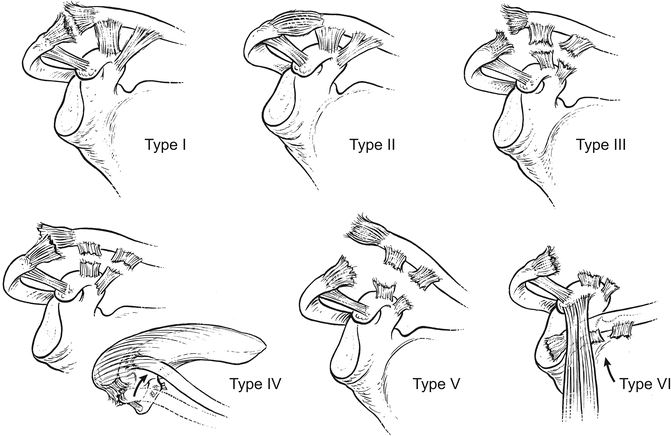
Acromioclavicular (AC) joint injuries can be classified into different types based on the severity of the damage to the ligaments connecting the acromion and clavicle. The classification system commonly used is known as the Rockwood classification.
Grade I - Sprain
- This is the mildest form of AC joint injury. The ligaments around the AC joint are stretched but not torn. There is minimal to no joint instability. Symptoms include mild pain, slight swelling, and localised tenderness.
Grade II - Partial Dislocation (Subluxation)
- Moderate injury with partial tearing of the ligaments. The AC joint is partially disrupted, leading to mild to moderate instability. There might be a visible bump or prominence at the top of the shoulder. Increased pain, swelling, and tenderness compared to Grade I.
Grade III - Complete Dislocation
- Severe injury involving complete tearing of the ligaments. The AC joint is completely disrupted, resulting in significant instability. A noticeable bump or deformity may be present. Considerable pain, swelling, and tenderness. This grade is further subdivided based on the degree of displacement and the involvement of surrounding structures.
Grade IV - Posterior Dislocation
- Complete dislocation with the clavicle displaced posteriorly (toward the back). Less common than anterior dislocations. Increased risk of damage to neurovascular structures.
Grade V - Superior Dislocation
- Complete dislocation with the clavicle displaced superiorly (upward). Rare but may involve serious soft tissue and neurovascular injuries.
Grade VI - Inferior Dislocation
- Extremely rare. Complete dislocation with the clavicle displaced inferiorly (downward). Involves damage to structures below the AC joint.
The grading system helps determine the appropriate treatment approach for AC joint injuries. Grades I and II injuries are often managed conservatively with non-surgical management, whilst Grades III-VI may require surgical intervention to restore joint stability and function. The choice of treatment depends on the specific characteristics of the injury, the patient’s symptoms, and their activity level.
Causes
- Direct impact to the shoulder.
- Falls onto an outstretched arm.
- Sports-related injuries, particularly in contact sports like football or hockey.
Symptoms
Pain: Immediate pain at the AC joint. Aggravated by shoulder movements.
Swelling: Localised swelling around the AC joint.
Tenderness: Tenderness upon palpation of the AC joint.
Limited Range of Motion: Difficulty moving the shoulder, especially during overhead activities.
Visible Deformity (in severe cases): Prominent bump or displacement at the AC joint.
Diagnosis
Clinical examination by a healthcare professional. X-rays to assess the severity and alignment of the injury. MRI or CT scans for a more detailed view of soft tissue damage.
Treatment
Non-operative management: Rest, ice, compression, and elevation (R.I.C.E. protocol). Immobilisation with a sling. Pain management with anti-inflammatory medications. Physical therapy to restore range of motion and strength.
Operative management (for severe cases): Surgical options may include AC joint reconstruction, stabilisation, or ligament repair. Reserved for Grade III injuries with significant instability.
Rehabilitation
Gradual reintroduction of shoulder movements. Physical therapy to strengthen the surrounding muscles. Controlled return to activities, avoiding high-impact or strenuous movements initially.
Prognosis
Grade I and II injuries often have a good prognosis with conservative management. Grade III injuries may require a longer recovery, and outcomes can vary based on the severity and individual factors.
Prevention
Proper technique in sports and activities involving shoulder movements. Strengthening exercises for the shoulder girdle muscles. Protective gear, especially in contact sports.
Yours sincerely,
Dr Bob Jang Orthopaedic Surgeon. BMed FRACS (Ortho) FAOrthA