What is a Clavicle Fracture?
A clavicle fracture, also known as a broken collarbone, is a common injury that occurs when the clavicle bone (collarbone) breaks due to direct trauma or impact. The clavicle is a long bone located between the sternum (breastbone) and the shoulder blade. Fractures can range from hairline cracks to complete breaks.
Causes
Clavicle fractures are often caused by the following factors:
- Falls onto the shoulder or outstretched arm
- Direct impact or trauma to the collarbone, such as during sports-related activities, motor vehicle accidents, or falls
- Birth trauma in newborns during difficult deliveries
Symptoms
Symptoms of a clavicle fracture may include:
- Pain and tenderness over the collarbone
- Swelling and bruising around the affected area
- Difficulty in moving the arm or shoulder
- Visible deformity or bump at the fracture site
- A grinding or cracking sound at the time of injury
- Pain worsens with arm movement or pressure on the collarbone
Diagnosis
To diagnose a clavicle fracture, your physician may perform the following:
- Physical examination: Assessing the range of motion, tenderness, swelling, and deformity around the collarbone.
- X-ray: Imaging tests to visualise the fracture and determine its location, severity, and alignment.
- CT scan: In some cases, a computed tomography (CT) scan may be recommended to evaluate complex fractures or assess surrounding structures.
Treatment Options
Treatment for clavicle fractures depends on the severity and location of the fracture. The options may include:
1. Non-Surgical Treatment
- Sling or Brace: Wearing a sling or brace to immobilise the arm and provide support to the fractured clavicle while it heals.
- Pain Management: Prescribing pain relievers or anti-inflammatory drugs to manage pain and reduce swelling.
- Physical Therapy: Engaging in exercises to maintain shoulder mobility and prevent stiffness.
2. Surgical Treatment
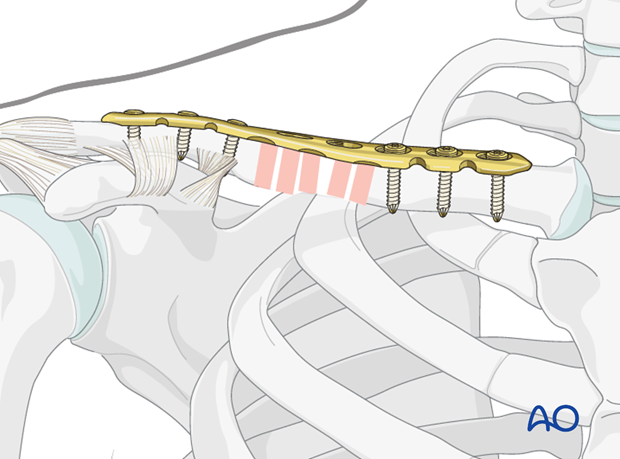
- Open Reduction and Internal Fixation: In severe cases with significant displacement or multiple fractures, surgery might be necessary. The procedure involves realigning the fractured bones and securing them with plates and screws.
Yours sincerely,
Dr Bob Jang Orthopaedic Surgeon. BMed FRACS (Ortho) FAOrthA
Broken Clavicle Operation Frequently Asked Questions
How much pain will I have?
Following a clavicle fracture, a patient will experience a variable amount of pain. This is dependent on what type of fracture you had and whether you had surgery. You will be given a prescription for pain medication following the injury or surgery to control your pain. You should take the pain medication regularly for the first 2 days and then only when required or before physiotherapy sessions. If you feel that you are having an extraordinary amount of pain following surgery despite taking pain medication, please contact my office (numbers listed below), or the hospital at which you had your operation.
How much swelling and bruising will there be?
Following a clavicle fracture there will be a moderate amount of swelling in the shoulder. This is due to the injury and, if performed, the surgery itself. It is not uncommon for the swelling and bruising to travel down the arm into the forearm and hand and also into the chest. It is extremely important to remove all jewellery, especially rings on fingers- these should be left at home. To help with the swelling you should perform simple hand, wrist and elbow exercises 3 times a day for 20 minutes each time. If you feel you have an extraordinary amount of swelling or bruising following surgery, please contact me as listed above.
How much drainage and bleeding will there be if I have surgery and when can I change the dressing?
A dressing will be applied over the wound. This dressing often becomes soaked with blood. It should be changed if it is soaked through, but may otherwise be left in place. Most wounds should be dry by 7 days after surgery. If your wounds are still draining thick blood or thick yellow fluid then you should contact me or my orthopaedic registrar at the public hospital.
When can I take a bath or shower?
It is important to keep the armpit clean and dry. When cleaning the armpit, don’t lift the arm with the muscles of the shoulder. Instead, lean forward by bending at the waist and allow the operated arm to gently dangle away from the body. You can then sponge and dry the armpit.
You should not soak the wound in a bath or swimming pool for 2 weeks. You may shower or sponge bath after surgery, but you must not scrub the wounds and must try to keep them dry by keeping it covered with the waterproof dressing. You may take the sling off when in the shower and support it with the other hand. If the wounds get wet, just pat them dry with a clean towel and apply a new dressing.
How often do I need to wear the sling?
You will wear the sling only for comfort, and you can stop using it as soon as you feel your pain has settled enough. Feel free to “wean” the use of the sling i.e. take it off and put it back on intermittently until you feel you don’t need it anymore.
Can I use my arm to eat or write?
Yes. This should improve as the days pass.
How can I get comfortable to sleep?
Some patients have difficulty finding a comfortable position to sleep. When you sleep on your back it may help to place a small pillow behind the elbow or shoulder to help support the weight of the shoulder. If you sleep on your side (the operated side up) then it may help to place a pillow between your arms. You can also sleep in a reclining chair or propped up with pillows in bed. When you are getting in and out of a bed or chair, DO NOT use your operated arm to push down.
When should I return to work?
As soon as you feel able to. This depends on the type of work you do, how much pain you are in and the medications you are on, and what type of surgery you have had. In general, most patients do not work until they are seen back in the rooms or clinic at 10 to 14 days after surgery. After this, most patients are able to tolerate either single-handed work (i.e. answering the phone) or light deskwork duties only.
Who should I contact if I think I have a problem?
You should contact Dr Jang through his office during work hours on the numbers listed below or the hospital at which you had your surgery.
Patient Exercises After Clavicle Operation
Shoulder Range of Motion Program
Use the power of the other arm to assist in gently but progressively moving your operated shoulder through a range of motion.
- All exercises to be done 4 times per day
- Perform each movement 10 times during each session.
- Hold each stretch for a count of 10 seconds
- Each time you perform your exercises try to increase the range of motion within the limits stated.
- Use pain as your guide. You should feel some discomfort with each stretch, however, it should not be severe pain.
- These exercises are important to prevent the development of a stiff / frozen shoulder.
Sling: Feel free to take the sling on and off, and to stop using it altogether as soon as your pain has settled adequately.
A. Hand & Wrist Exercises
Begin these exercises now
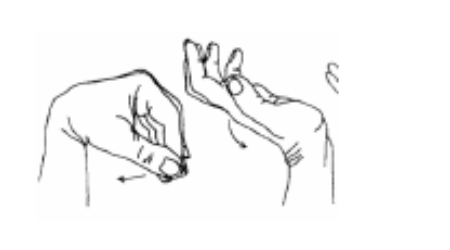
Open and close your hand by making a fist then straightening out your fingers. Keep this “hand pumping” exercise going as much and as often as you can- it helps to prevent swelling.
Bend your wrist back and forth as if knocking on a door.
B. Elbow Exercises
Begin these exercises now
Bend and straighten your elbow. You may perform this exercise initially with the help of the other arm but you can use the muscles of the operated arm.
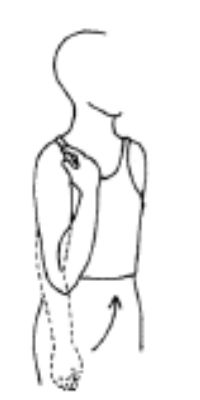
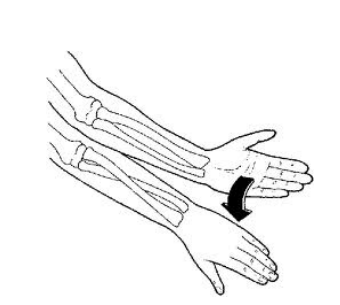
With your elbow at your side and bent at a right angle, turn palm up and palm down.
External Rotation Exercises
Begin this exercise now
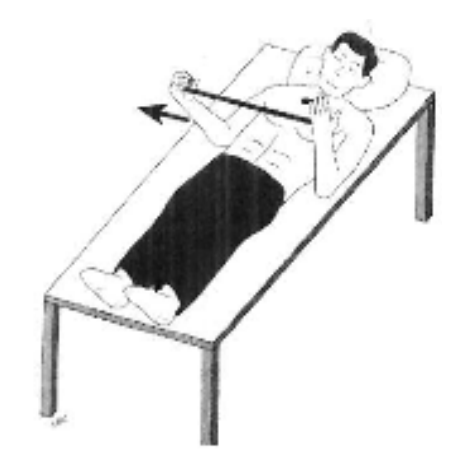
With both elbows by your side and your arms bent at 90 degrees, hold a stick (e.g. cane, cut-off broom stick) between your hands. By using the good arm, gently push the operated arm outward from your body using the stick. Keep your elbow against the side of your body. It is easiest to perform this exercise lying down. As you feel more comfortable you can perform this exercise standing. You should increase the amount of external rotation slowly.
Forward Elevation Exercise
Begin this exercise now.
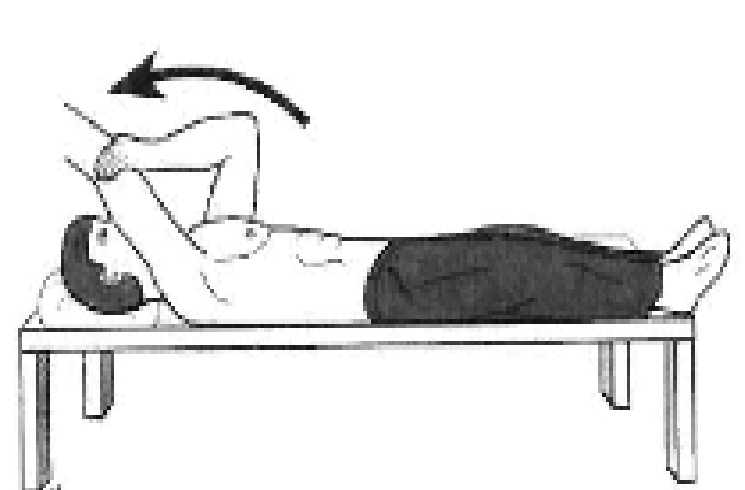
While lying on your back, gently raise your arm up towards your head and over your shoulder. You should initially perform this exercise by using the good arm and helping to push the operated arm up. As you slowly feel more comfortable you can increase the range of motion over the shoulder and decrease the amount of help from your good arm. Once you can comfortably lift your arm completely above your shoulder you can perform this exercise standing. To transition from a lying to a standing position, it is easiest to do this progressively by using a reclining chair and start the exercises lying down and then slowly and progressively raising the seat back up (usually over days or weeks), as you feel comfortable.